
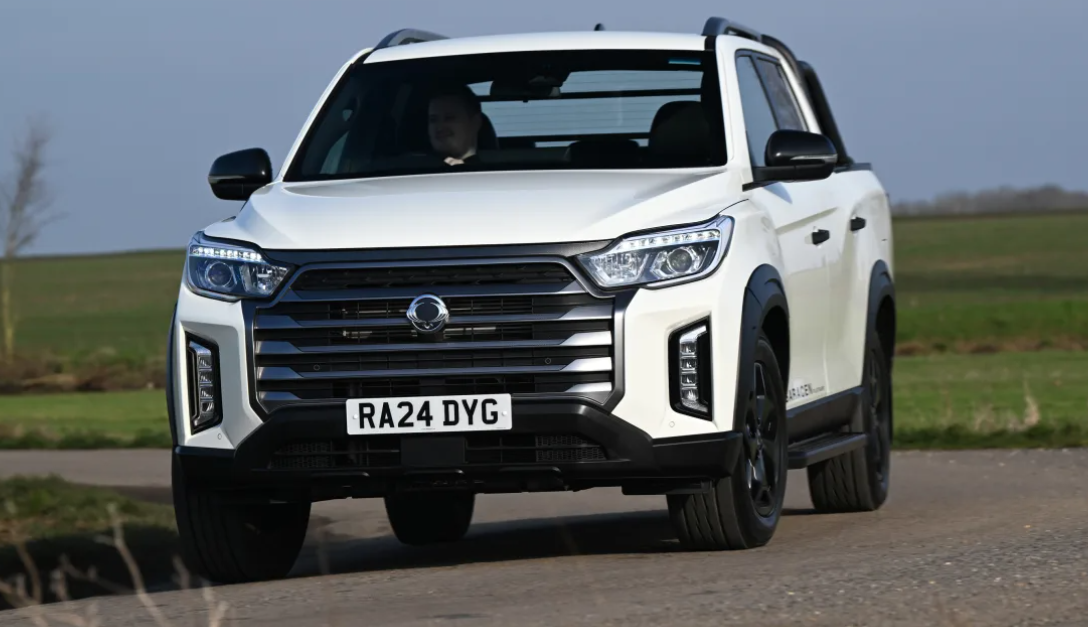
Our opinion on the KGM Musso
At a time when pick-up trucks are becoming more premium to offer tradespeople a genuine alternative to SUVs, the KGM Musso – formerly known as the SsangYong Musso – is appealingly simple with a strong focus on value and load-lugging capabilities. The downside of that simplicity is that it feels very agricultural, with an incredibly firm, bouncy ride and a dull interior featuring outdated technology.
About the KGM Musso
Since SsangYong was rebranded as KGM in 2023, the company has introduced some models with new nameplates to its line-up, and we’re expecting a few more still to come. However, the Musso name has stuck around, having originally been used on an SUV in the nineties before being applied to a pick-up truck in the late 2000s.
The second-generation Musso pick-up arrived in 2018, received a mid-life facelift in 2022 and was then given another series of updates for its interior. Underneath, it’s based on the same hardware as the Rexton SUV, featuring body-on-chassis construction, which is commonplace in this sector because it gives good off-road ability and high load-carrying capacity.
The current Musso’s days are now numbered because a replacement is in the works. This incoming model will share much of its DNA with the new electric Musso that’s also coming to the UK, which in turn is based on the KGM Torres SUV. We’ve already driven the new electric model, so be sure to also check out our dedicated KGM Musso EV road test.
For now, though, the existing Musso is available exclusively with a 2.2-litre four-cylinder turbocharged diesel engine that is shared with the Rexton. It delivers 203bhp and up to 441Nm of torque, and can be specified with either a six-speed manual or six-speed automatic transmission. All versions are fitted with a part-time four-wheel-drive system that sends drive to the front wheels only when it is needed, with high and low-range 4WD modes selectable by the driver.
The Musso is available in three trims: Rebel, Saracen, and top-of-the-range Saracen+. These models are geared towards private buyers as well as businesses, with larger alloy wheels and a smattering of smarter cabin materials, along with optional leather seats and upgraded infotainment systems.
Other pick-up trucks, such as the Ford Ranger, offer the added flexibility of a single-cab variant, but the Musso only comes in the double-cab form – although there is a choice of standard and long-wheelbase, with the LWB only available with an automatic transmission and Saracen+ trim.
When the Musso was launched with its mid-life facelift in 2022, it represented excellent value against its rivals, with prices starting from under £24,000 (excluding VAT). Since then, the starting price has risen to over £27,000 (excluding VAT) – severely reducing the cost advantage the Musso once boasted – the range-topping version costs more than £35k.
The Musso doesn’t feature an engine stop-start system, either as standard or as an option, which is quite baffling. All of the KGM’s key rivals get this basic, fuel-saving feature, and this puts it at a further disadvantage for everyday running costs.
The Musso is fitted with a large, 75-litre fuel tank, which helps to mitigate the low economy, and could potentially provide a range of just under 500 miles. As with most pick-ups, aerodynamics play a key part in reducing fuel economy, and the Musso has a large frontal area, tall body and tyres designed for grip rather than low rolling resistance, all of which harm efficiency.
Similarly, an official CO2 figure of 255g/km is high by general pick-up class standards. This figure increases to 308g/km when the automatic gearbox option is ticked.
Depending on the exact model, the Musso falls into either insurance group 48 or 50 (out of 50). That’s significantly higher than the more expensive Ford Ranger and Volkswagen Amarok, neither of which fall into group 50, nor do the Toyota Hilux or Isuzu D-Max.