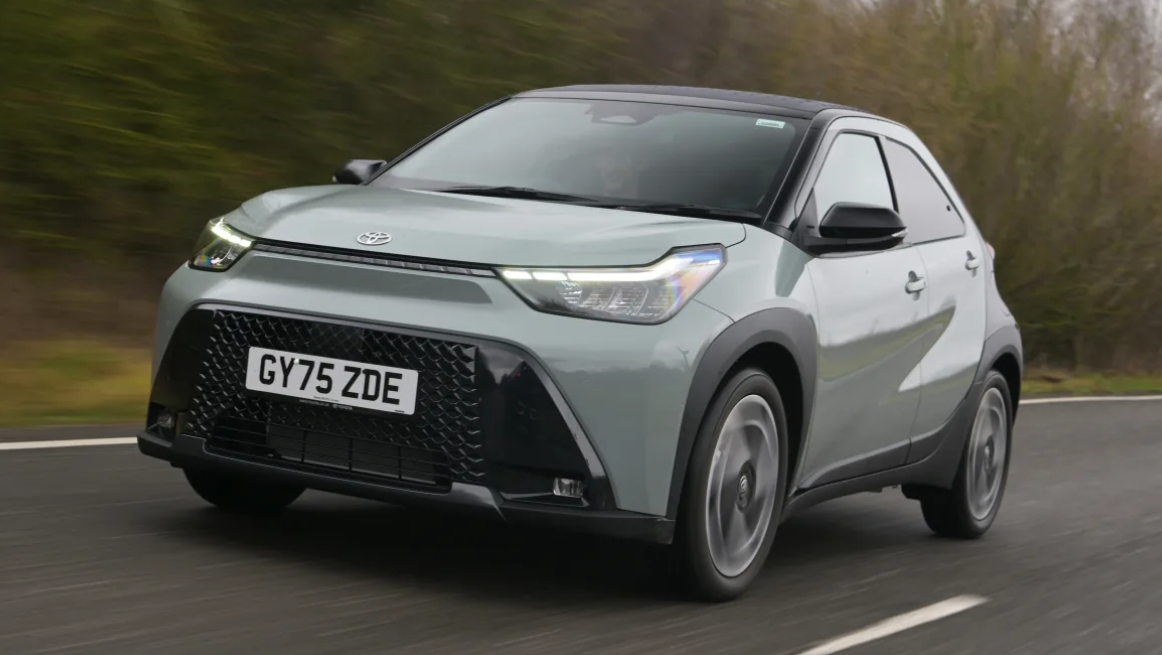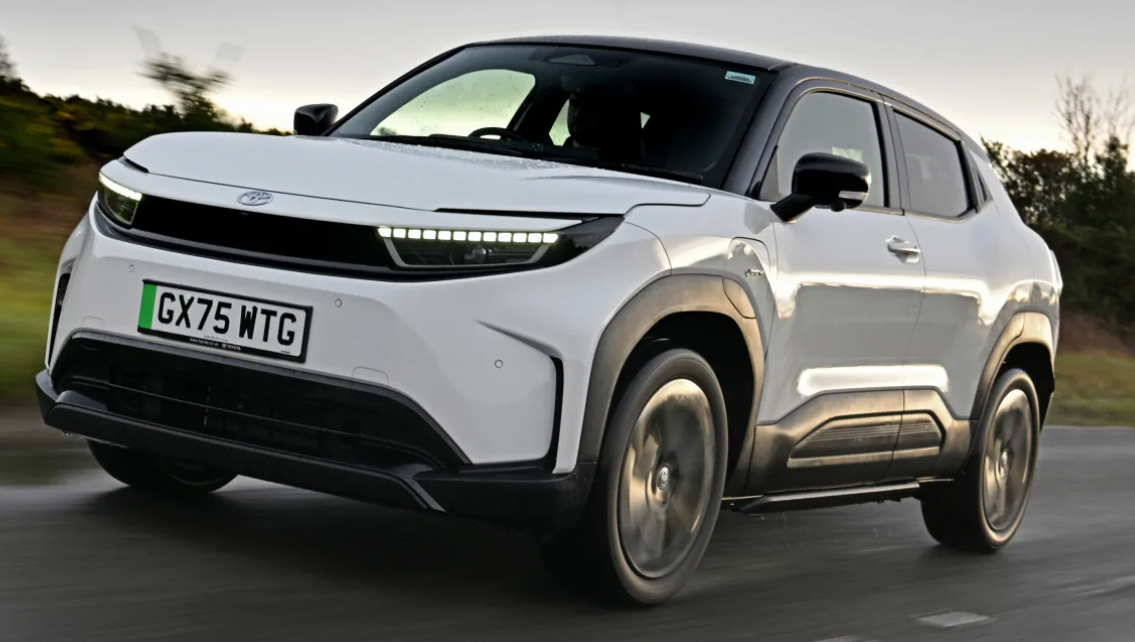
Our opinion on the Toyota Urban Cruiser
When it comes to an affordable electric crossover, we expected much more from Toyota. The new Urban Cruiser isn’t necessarily a bad car, it’s just unremarkable. We found it lacking personality, charm and a unique selling point that will allow it to triumph in the thunderdome that is the small electric SUV segment. Put simply, whatever it can do, most rivals can probably do better.
Customers expect more from Toyota, and rightfully so considering this car’s price point compared to its Suzuki e Vitara sister car. While the Suzuki has a bit more personality with the option of a dual-motor 4×4 system, the Urban Cruiser’s 2WD setup with average range and charging ability don’t help it stand out.
About the Toyota Urban Cruiser
These days it feels like a new electric SUV is unveiled every five minutes, and just about every mainstream car maker either has one in its range or in the pipeline. Despite its rich history of hybrids, Toyota has been fairly slow on the uptake in the pure-EV market – though joining the recently updated bZ4X and the new C-HR+ is this, the Toyota Urban Cruiser.
It might be a global automotive giant, but Toyota looked to Suzuki to help develop the second-generation Urban Cruiser. A sister model of the new e Vitara, the resulting vehicle sits on a brand-new, dedicated EV platform called Heartect-e that the two firms worked on together. The only real differences between the models are the front-end design and badges, plus the Suzuki offers the option of all-wheel drive.
While the Urban Cruiser is front-wheel drive only, it does at least get the same two battery options as the e Vitara – a 49kWh unit and a 61kWh with up to 265 miles of range.
Toyota Urban Cruiser prices and latest deals
Pricing for the Urban Cruiser starts at £29,995 for the Icon with the small battery. The larger battery arrives on the mid-range Design trim at £33,495 and then finally there’s the £35,745 Excel.
Unlike the e Vitara, which gets Suzuki’s ‘Suzuki Granted’ discount of £3,750 until the end of 2025 bringing prices to just over £26,000, Toyota hasn’t introduced its own ‘grant’ – nor does the Urban Cruiser qualify for the government’s Electric Car Grant.
Now you can buy a car through our network of top dealers around the UK. Search for the latest deals…
Performance, 0-60mph acceleration and top speed
Some small EVs like the Volvo EX30 and MG4 provide 0-62mph sprint times that can trouble bonafide sports cars. That’s clearly not the case with the Urban Cruiser, but we found that acceleration is still relatively nippy on our test drive thanks to typically-instant torque from the electric motor. The Urban Cruiser doesn’t feel quite as slow as its 0-62mph time suggests, and gentle throttle inputs can give quick bursts of acceleration from 0 to 30mph or 30 to 60mph. If you’re a bit heavy-footed, especially in the wet, the front wheels can scramble for grip.
With a name like Urban Cruiser you’d expected this car to be exceptional in town. The turning circle of 10.4 metres is pretty good as is front and rear visibility – aided by a rather high driving position.
The light steering paired with a responsive enough front end means that darting around parked cars and traffic is a breeze. We did find that at car park speeds on rough surfaces, the steering itself felt brittle – shaking as the front wheels dip into potholes.
There’s no one-pedal driving mode in the Urban Cruiser. Unlike the Renault 4 and Kia EV3, there are no paddles on the steering wheel to adjust the brake regeneration settings either, the best that Toyota could come up with as a shortcut is a button on the centre control that simply turns the system on or off.
You adjust the strength of the regen via the touchscreen and it’s a ridiculously convoluted process in the Urban Cruiser that involves trawling through settings menus. When you find the right one, you can opt for low, medium or high levels. You can’t change this while you’re driving, probably because Toyota knows drivers would be too distracted by the process. And even after all that, the strongest mode takes a long time (and distance) to slow the car to a crawl when you lift off the throttle.
Country road driving and handling
Country roads on our test route gave us an opportunity to try Toyota’s ‘active cornering control’. This is essentially torque vectoring by braking, so when cornering the car uses the brakes on the inside wheel to tuck the car’s nose in and prevent understeer. The overall nimbleness of the Urban Cruiser is decent as a result, but an unsettling side effect of the system is that the car feels like it has no grip at the rear, which is the opposite of confidence-inspiring. If anything, the handling feels even more unnatural from the passenger seat.